Electronic devices have become an essential part of everyday life. From laptops and smartphones to televisions, printers and household appliances, we depend on electronics for work, communication and entertainment.
But what happens when these devices stop working or become outdated?
Many households and businesses in Bangalore accumulate old computers, damaged electronics, unused chargers and other electronic items without knowing how to dispose of them properly. These discarded products are known as electronic waste, commonly called e-waste.
Responsible e-waste collection and recycling help recover valuable materials, reduce environmental risks and ensure discarded electronics are handled through appropriate channels.
1. What Is E-Waste?
E-waste refers to discarded electrical and electronic equipment, including products that are broken, outdated or no longer useful.
Common examples include:
- Old laptops and desktop computers
- Computer monitors, keyboards and accessories
- Smartphones and tablets
- Printers and scanners
- Televisions and electronic accessories
- Routers, cables and circuit boards
- Servers and office IT equipment
These products contain materials such as copper, aluminium, iron and plastics. Some electronic components may also contain substances that require careful handling. E-waste should therefore be directed towards suitable collection, refurbishment or recycling channels rather than mixed with ordinary household garbage.
2. Why Is Responsible E-Waste Recycling Important?
Electronic waste is not simply unwanted equipment. It contains materials that can be recovered and reused, but improper handling can create environmental and health risks.
A. Reduces Environmental Pollution
Discarded electronic devices may contain substances such as lead, mercury and cadmium. When electronics are dumped, burned or dismantled using unsafe methods, these substances can contaminate the surrounding environment. Responsible recycling helps prevent improper disposal and supports safer material recovery.
B. Recovers Valuable Materials
Electronic products contain several reusable materials, including copper from wires and components, aluminium from casings, iron and steel from equipment frames, and recoverable materials from certain electronic components. Recovering these materials can reduce the need to extract additional raw materials.
C. Supports a Circular Economy
Recycling helps materials re-enter the manufacturing supply chain instead of being discarded after a product reaches the end of its useful life. Where suitable, electronic devices can also be repaired, refurbished or reused, extending their useful lifespan.
D. Encourages Responsible Consumption
When individuals and businesses understand how discarded electronics are managed, they can make more informed decisions about purchasing, maintaining and disposing of electronic products.
3. How Is E-Waste Handled in Bangalore?
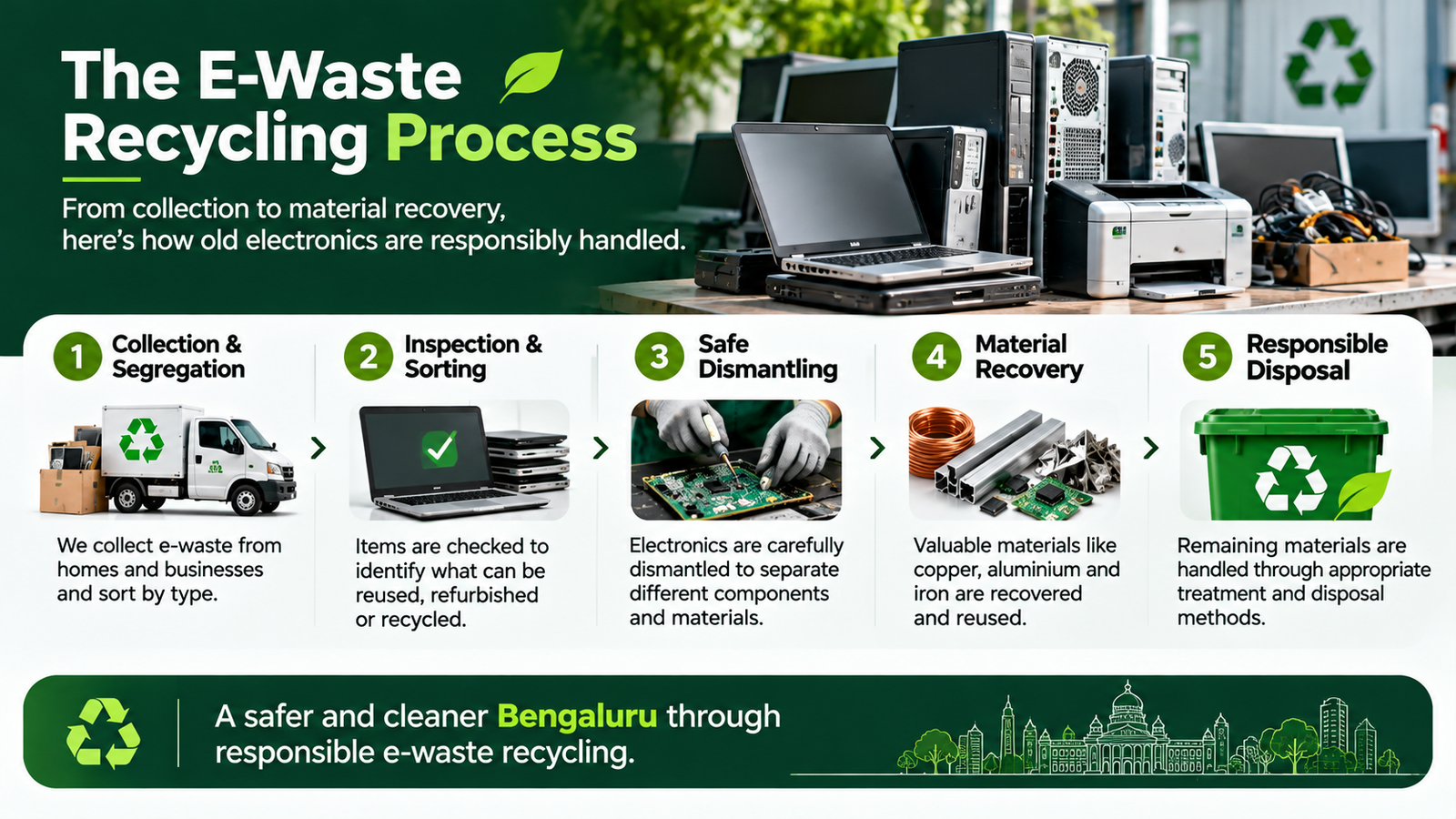
E-waste management involves several stages. The exact process depends on the type of electronic equipment, its condition and the authorised facility handling it.
Step 1: Collection and Segregation
The first step is collecting discarded electronic equipment from households, offices, institutions and commercial establishments. Different electronic items are identified and separated according to their type. Laptops, desktop computers, printers, cables and circuit boards may require different handling processes.
Step 2: Inspection and Sorting
Collected electronics are inspected to determine whether they can be reused, repaired, refurbished or sent for recycling. Equipment that is still functional may have a potential second life through refurbishment. Items that cannot be reused are directed towards appropriate recycling processes.
Step 3: Safe Dismantling
At suitable authorised facilities, electronic equipment is dismantled using appropriate procedures. Different components, including circuit boards, cables, plastic casings and metal parts, are separated to prepare them for further processing.
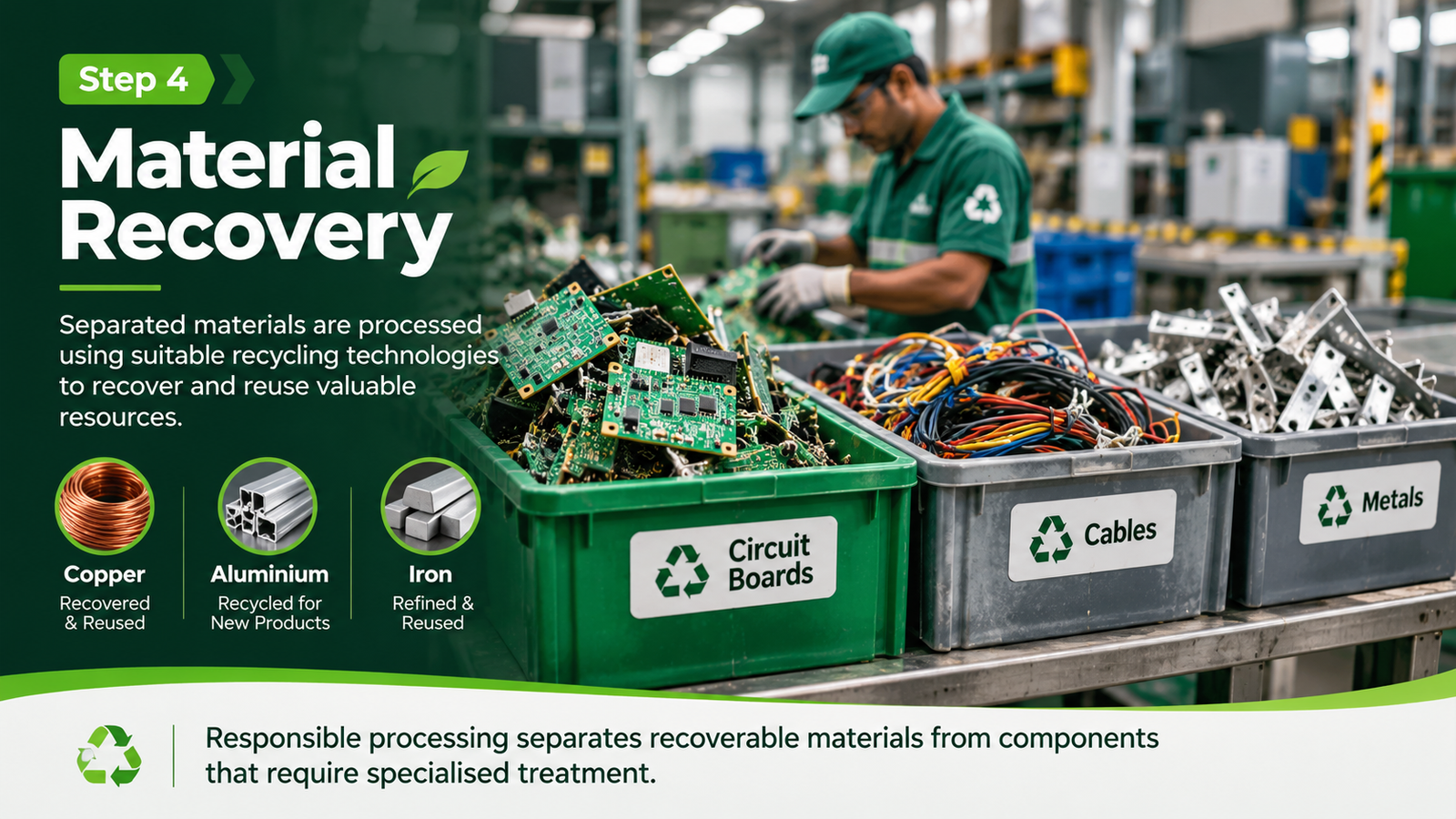
Step 4: Material Recovery
Separated materials are processed using suitable recycling technologies. Metals such as copper, aluminium and iron can be recovered and reused in manufacturing. Other materials are handled according to their composition and applicable environmental requirements.
Step 5: Responsible Management of Residual Waste
Not every component can be recycled or recovered. Remaining materials must be managed through appropriate treatment and disposal methods rather than being dumped or burned. This is why choosing a responsible downstream recycling channel is important.
4. Where Can You Sell or Dispose of Old Electronics in Bangalore?
Bangalore has a large number of households, offices, educational institutions and technology businesses that regularly replace electronic equipment. If you have old electronics at home or in your workplace, consider these options:
Manufacturer Take-Back Programmes
Some electronic manufacturers provide collection or take-back programmes for discarded products. Check the manufacturer's current programme and accepted product categories.
Authorised E-Waste Recyclers
Appropriately registered recyclers handle electronic waste through regulated recycling processes. Check the relevant registration and collection arrangements before handing over equipment.
Responsible Scrap Collection Services
Collection services can help arrange pickup of unwanted electronics. Before handing over e-waste, ask how it will be transferred to an appropriate downstream recycler. For businesses disposing of large quantities of computers, servers and IT equipment, verify the collection and recycling arrangements.
5. What Should You Do Before Giving Away Old Electronics?
Before handing over electronic equipment for collection, follow these precautions:
- Back up important files from your computer, laptop or smartphone.
- Sign out of personal and business accounts.
- Remove SIM cards and memory cards.
- Perform a factory reset where appropriate.
- Securely erase sensitive data from storage devices.
- Remove accessories and organise cables separately.
- Keep batteries separate where required and follow appropriate battery disposal procedures.
For businesses, data security is particularly important when disposing of old computers, storage devices and office IT equipment.
6. E-Waste Management Rules in India
India regulates electronic waste through the E-Waste (Management) Rules, 2022, which came into effect on 1 April 2023. These rules establish an Extended Producer Responsibility (EPR) framework for covered producers and provide for registration of relevant entities, including manufacturers, producers, refurbishers and recyclers, through the Central Pollution Control Board (CPCB) system.
The framework aims to support environmentally sound management of electronic waste and improve accountability throughout the recycling chain. Consumers should prefer appropriate collection and recycling channels rather than informal disposal methods.
7. Why Bangalore Needs Better E-Waste Collection
Bangalore is one of India's major technology and business centres. Thousands of homes and organisations use computers, smartphones, printers, networking equipment and other electronic devices every day. As technology changes, older equipment is frequently replaced.
Without proper collection systems, discarded devices can enter unsuitable disposal channels. Better awareness, convenient collection services and responsible recycling partnerships can help improve how electronic waste is managed across the city.
8. How Scrapwaala Can Help With Old Electronics Collection in Bangalore
Have old computers, laptops, printers or other unwanted electronic items taking up space? Scrapwaala provides doorstep scrap collection enquiries in Bangalore, helping households and businesses arrange collection of unwanted materials.
Whether you are clearing out old electronics from your home or planning an office clearance, contact Scrapwaala to enquire about collection availability and accepted items.
- Doorstep collection enquiries for households and businesses.
- Collection arrangements for different scrap categories.
- Convenient booking enquiries through WhatsApp.
- Support for clearing unwanted materials from your premises.
For electronic waste, confirm the appropriate downstream recycling and handling arrangements before collection.
Have Old Electronics to Clear?
Contact Scrapwaala to enquire about accepted items and available collection arrangements in Bangalore.
Enquire on WhatsApp+91 83109 09994 | scrapwaala.com
Frequently Asked Questions (FAQs)
1. What items are considered e-waste?
Old laptops, desktop computers, monitors, smartphones, printers, circuit boards, cables and other discarded electrical and electronic equipment are common examples of e-waste.
2. Can I sell old laptops and computers in Bangalore?
You can enquire with electronic scrap collection services about accepting old laptops, desktops and computer components. Confirm the collection terms and downstream handling arrangements before pickup.
3. Why should electronic waste not be thrown into regular garbage?
Electronic equipment may contain hazardous substances and recoverable materials. Improper disposal can create environmental and health risks while wasting useful resources.
4. What happens to electronic waste after collection?
Depending on its condition, electronic equipment may be reused, refurbished, dismantled or sent to an appropriate recycling facility for material recovery.
5. Is e-waste recycling regulated in India?
Yes. The E-Waste (Management) Rules, 2022 establish the regulatory framework for managing covered electronic waste in India. You can refer to the Central Pollution Control Board's e-waste resources for official information.
6. How can I arrange old electronics collection in Bangalore?
Contact Scrapwaala through its website or WhatsApp to enquire about accepted electronic items and available doorstep collection arrangements.
7. Should I erase my data before selling an old computer?
Yes. Back up important information and securely erase personal or business data before handing over computers, laptops, smartphones or storage devices.
Conclusion
Electronic waste management is an important part of building a cleaner and more sustainable Bangalore. Instead of allowing old computers, smartphones and electronic equipment to accumulate or enter unsuitable disposal channels, households and businesses should choose responsible collection and recycling options.
Every properly managed electronic item represents an opportunity to recover useful materials, reduce environmental risks and support a more circular economy.
Make responsible disposal your next step. Choose the right collection channel and give your unwanted electronics a better destination.
Scrapwaala – Doorstep Scrap Collection in Bangalore.